
Versailles restoration over four centuries
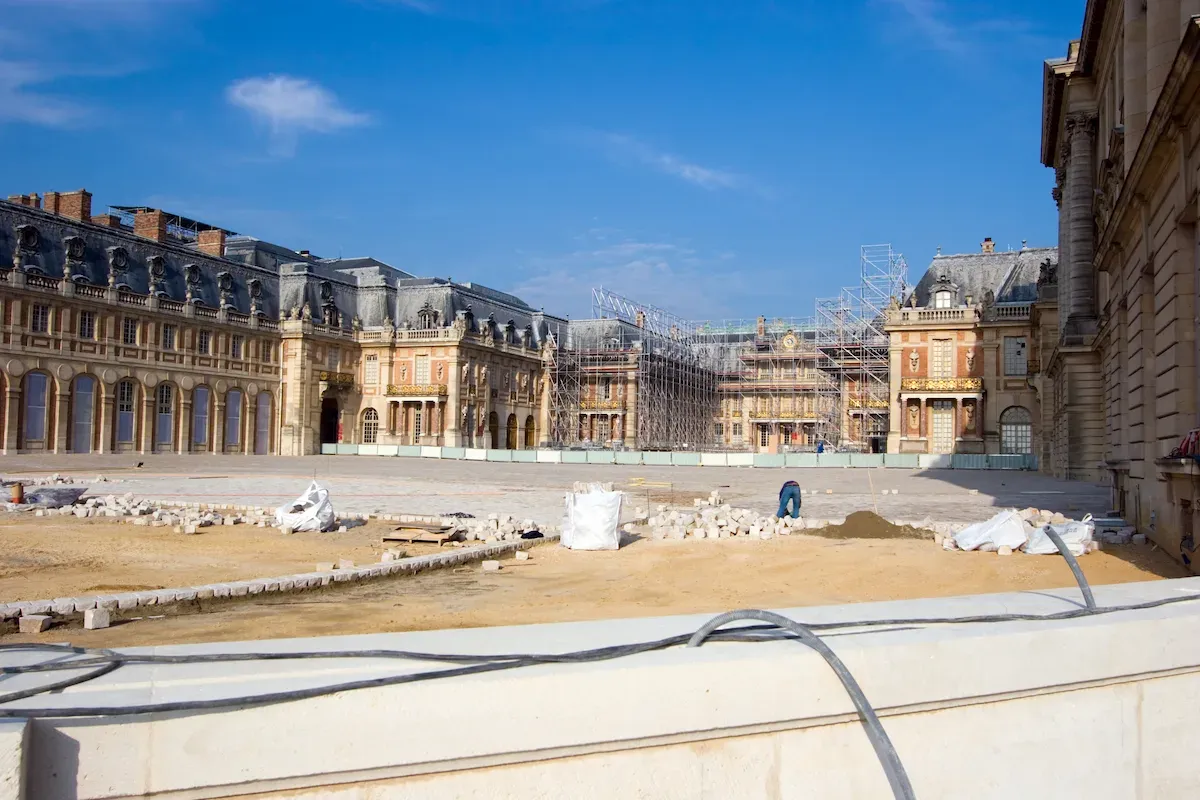
The Palace of Versailles (Chateau de Versailles) has been under constant restoration since the 19th century. Its 2,300 rooms spread across more than 63,000 square metres of floor space, 2,143 windows, and 1,252 chimneys. Staff and restorers balance historical authenticity with the pressure of welcoming roughly 15 million visitors each year.
Support when you need it
Customer support to help you with everything you need from 8:00 to 18:00.
Fast and online booking
Select your ticket for your needs and preferences and avoid the lines booking here.
Top attraction in Versailles
Discover the Palace of Versailles, the largest royal residence in Europe and a UNESCO World Heritage Site since 1979.
Why does the Palace of Versailles need constant restoration?
Three centuries of construction and repurposing have left the palace with a wide range of materials and techniques that all age at different rates. Stone facades, gilded interiors, painted ceilings, lead roofing, woodwork, and garden hydraulics each require specialized conservation. The 15 million annual visitors to the palace, park, and gardens accelerate wear on floors, staircases, and decorative surfaces.
Since 1979, when UNESCO designated the palace and park a World Heritage Site under criteria (i), (ii), and (vi), France has held an international obligation to preserve Versailles. The French government owns the palace, and since 1995 the Public Establishment of the Palace, Museum and National Estate of Versailles has managed it under the direction of the French Ministry of Culture.
What is the history of Versailles restoration campaigns?
Restoration at Versailles began almost as soon as the palace stopped functioning as a royal residence. After the French Revolution, the Convention ordered the palace's contents sold at auction between 25 August 1793 and 11 August 1794. The sales dispersed furnishings and art across seventeen thousand lots. The palace itself survived demolition partly because it was repurposed.
In 1837, King Louis-Philippe transformed Versailles into the Museum of the History of France. He preserved the building but altered many original interiors to house new painting and sculpture collections. In the early 20th century, Pierre de Nolhac, curator of the palace, reversed some of those changes and began restoring the central section to its Ancien Regime appearance.
Between 1925 and 1928, the American philanthropist John D. Rockefeller Jr. donated $2,166,000 (roughly $38 million today) to restore and refurbish the palace. French government resources were stretched thin at the time, and the donation filled a gap that no domestic source could cover.
Restoration grew more systematic in the late 20th century. Individual room campaigns gave way to the palace-wide Grand Versailles project in 2003, the first integrated preservation strategy for the full estate.
How does restoration affect your visit to Versailles?
Active restoration projects may close individual rooms or sections of the gardens, but the Palace of Versailles remains open to visitors throughout. The palace welcomes visitors Tuesday through Sunday from 09:00 to 18:30 (April to October) or 17:30 (November to March), with Monday closures.
You may see scaffolding and protective barriers in areas under active restoration. The Royal Chapel, Salon of Diana, and Oeil-de-Boeuf antechamber are among the spaces that have been or may be affected. Closures rotate as projects complete and new ones begin. If you miss one room, you may gain access to another that has just reopened. The palace map and entrances guide can help you plan an efficient route.
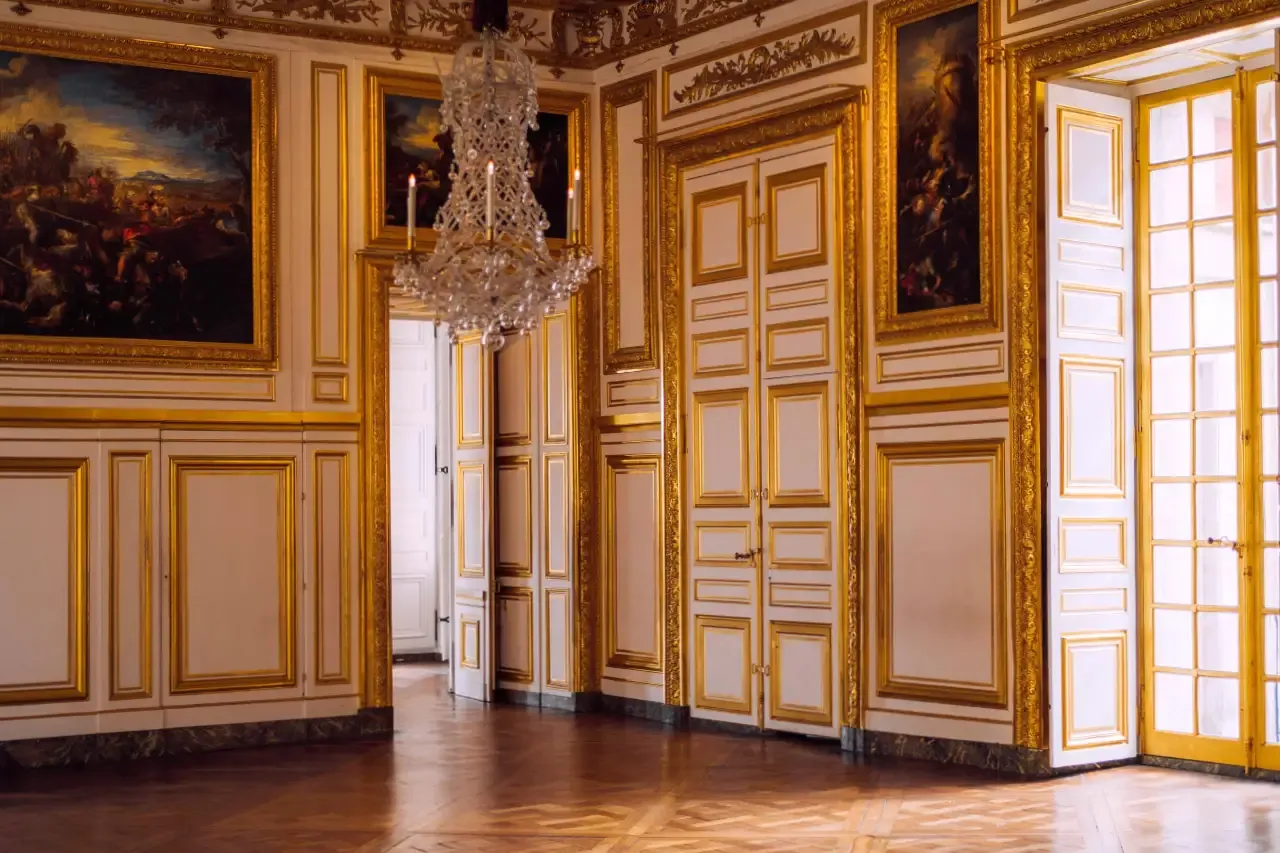
Restored rooms look closer to their historical appearance than they have in decades. Marie Antoinette's Private Chambers and the Hall of Mirrors now show vivid colour, clean gilding, and stabilised artworks.
If the restoration process itself interests you, watch for special events and open workshops that the palace organises. The Societies of Friends of the Palace of Versailles have supported restoration projects and collection enrichment for over a century. They accept contributions and provide information on ongoing conservation work.
What is the Grand Versailles project?
The Grand Versailles project, announced in 2003, is the largest development programme for the former royal estate since the reign of Louis-Philippe. Spread across 17 years and funded with a budget of approximately 500 million euros, the project addresses three priorities: restoring the historical monument and its decor, upgrading security for visitors and buildings, and improving visitor reception.
Phase 1 (2004–2011)
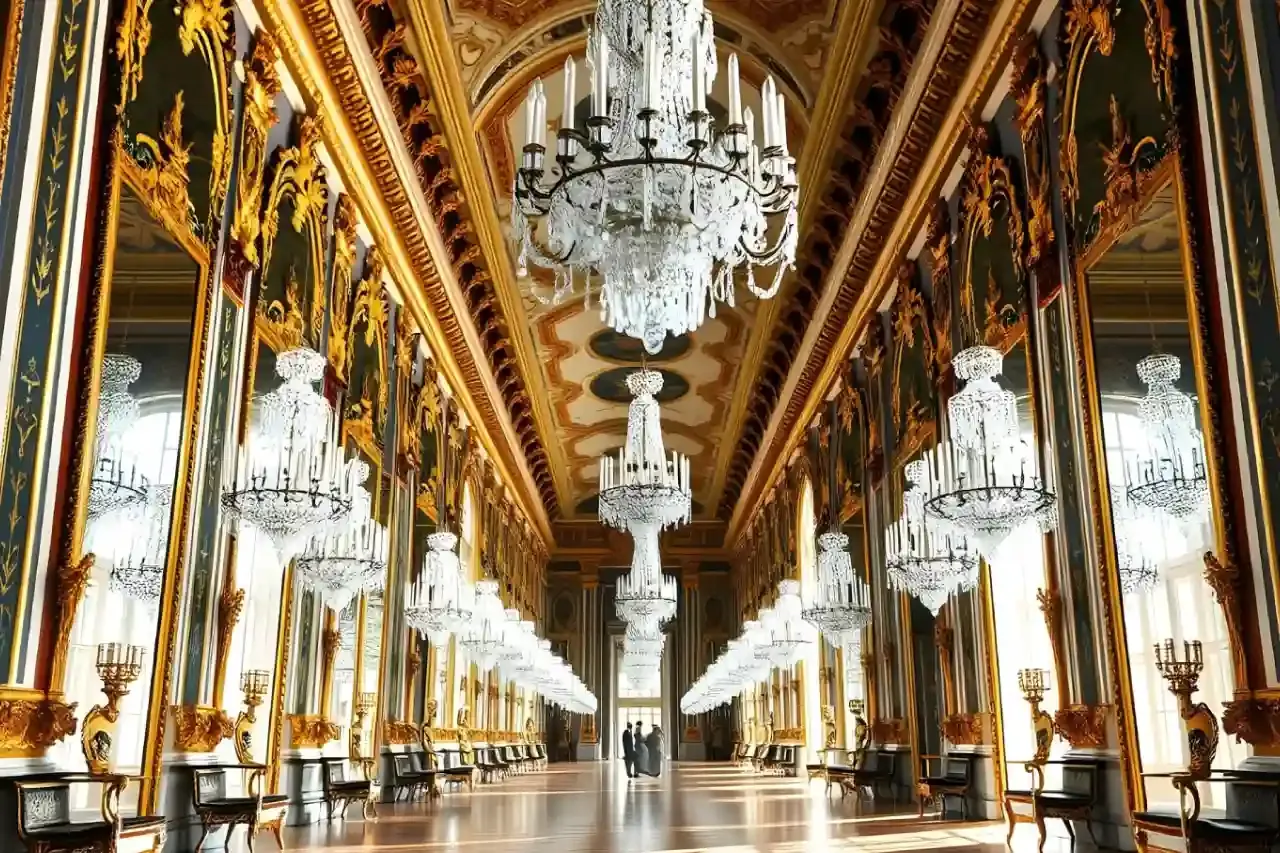
Concentrated on infrastructure and flagship restorations. Key achievements included the restoration of the Hall of Mirrors (Galerie des Glaces) under the sponsorship of Vinci, the reconstruction of the Royal Gate and Railings sponsored by Monnoyeur, restoration of the central Palace roofs, complete modernisation of the Royal Opera's technical installations, creation of primary utility networks, and the fitting out of the Dufour and Gabriel pavilions to improve visitor entry points.
What restoration projects are currently underway at Versailles?
Multiple restoration campaigns are active across the palace and grounds as of 2026.
| Project | Started | Expected Completion | Patron |
|---|---|---|---|
| Hall of Mirrors (renewed presentation) | -- | September 2026 | -- |
| Salon of Diana ceiling | November 2024 | 2025–2026 | -- |
| Chestnut Grove | -- | Summer 2026 | -- |
| Royal Chapel (Chapelle Royale) | Late 2017 | Completed early 2021 (extended work ongoing) | Fondation Philanthropia |
| Poets' Cabinet | -- | Expected 2026 | -- |
| Oeil-de-Boeuf antechamber | February 2023 | -- | -- |
The Royal Chapel (Chapelle Royale) received one of the largest recent restoration campaigns. More than forty years after its last major restoration, the chapel required urgent intervention on its roof timbers, roof and decorative lead work, statues, window frames, and stained glass. Restorers worked through defined stages: assembling scaffolding and a temporary umbrella roof, removing the existing roof, consolidating roof timbers, restoring all stonework and window openings, and restoring all lead elements and gilding. The Fondation Philanthropia funds this project.
The Salon of Diana, part of the King's Grand Apartment, began ceiling restoration in November 2024. The Diana Room houses the bust of Louis XIV that Bernini sculpted during his visit to France in 1665.
The Poets' Cabinet sits in the royal private apartments. Its restoration aims to recover the room's original character by 2026.
Which Versailles restoration projects have been completed?
The Palace of Versailles has completed dozens of individual restoration projects over the past two decades. Each one returned a room, garden feature, or artwork to a condition closer to its historical appearance.
| Project | Patron / Sponsor | Completed |
|---|---|---|
| Hall of Mirrors | Vinci | 2007 (Phase 1 of Grand Versailles) |
| Royal Gate and Railings | Monnoyeur | Phase 1 (2004–2011) |
| Petit Trianon | Montres Breguet | Phase 1 (2004–2011) |
| Apollo's Fountain | CMA CGM Group | March 2024 |
| Water Sideboard Fountain (Trianon) | Sponsorship | 2023 |
| Marie Antoinette's Private Chambers | -- | Reopened June 2023 |
| King's Corner Room | -- | Completed (18 months of work) |
| Dauphine's Private Chamber | Skills-based patronage | Started June 2021 |
| Madame du Barry's apartment | -- | Completed |
| Jean Nocret's The Royal Family in Olympus | -- | Started October 2022 |
| Passement astronomical clock | -- | Completed |
| Buffet d'Eau Fountain (Trianon gardens) | Sponsorship | 2023 |
Conservators cleaned and conserved the Hall of Mirrors' 578 mirrors facing 17 windows, then stabilised Charles Le Brun's ceiling fresco, which depicts 30 scenes from the first 18 years of Louis XIV's reign.
Apollo's Fountain reopened in March 2024 after 18 months of work funded by the CMA CGM Group. Marie Antoinette's Private Chambers, the personal rooms of the last queen of France before the Revolution, welcomed visitors again from 27 June 2023.
How are Versailles restorations funded?
The Palace of Versailles draws on French government funding, corporate patronage, and public participation programmes to finance its conservation work.
Corporate patrons have funded many of the highest-profile restorations. Rolex France sponsored the restoration of the King's Private Chamber, the last room in the King's Private Apartments that still had faded gilding and paintwork. Vinci underwrote the Hall of Mirrors restoration during Phase 1 of the Grand Versailles project. The CMA CGM Group funded Apollo's Fountain restoration, and Montres Breguet supported the Petit Trianon. For the Royal Chapel, the Fondation Philanthropia stepped in to fund the complex multi-stage restoration.
Between 1925 and 1928, John D. Rockefeller Jr. provided $2,166,000 for restoration and refurbishment, a donation worth approximately $38 million in current terms.
The palace also runs adoption programmes that let individuals contribute. Visitors and supporters can adopt a bust from the Marble Courtyard, a bench in the Estate of Trianon, or a linden tree in the Allee de l'Accroissement, where staff replanted more than 100 trees as part of a pathway restoration. A patronage token programme, created in collaboration with Maison Arthus-Bertrand, lets visitors donate a small amount in addition to their admission and receive a limited-edition collectible token.
What restoration techniques are used at Versailles?
Restorers at Versailles combine centuries-old artisan methods with modern conservation science. Each project requires a different mix of skills depending on the materials involved.
Gilding is the most visible restoration technique at the palace. The King's Private Chamber, for example, required the renewal of faded gilding across its Rococo-era decorative surfaces. Traditional gold leaf application follows the same methods used in the 18th century: preparing the surface with multiple layers of bole (a clay base), applying thin sheets of gold leaf, and burnishing them to achieve the desired sheen.
Ceiling painting conservation involves stabilising paint layers, removing centuries of grime and overpainting, and retouching losses. The Diana Room ceiling restoration, which started in November 2024, uncovered the painted vault and stucco beneath layers of accumulated soot and varnish degradation. Conservators applied similar treatment to the Hall of Mirrors ceiling, painted by Charles Le Brun, during its earlier restoration.
Stone and masonry restoration continues across the palace facades and the Royal Chapel. The chapel shows the range of specialties involved: stonemasons consolidate walls, glaziers repair window openings in the attic level, and metalworkers restore decorative lead elements on the roof, each group working in sequence.
Timber conservation protects the palace's roof structures. The Royal Chapel restoration included urgent intervention on the roof timbers. Restorers assessed each beam before deciding whether to consolidate, reinforce, or replace it.
The original palace materials (red brick, white stone, and grey slates with gold accents) continue to define the restoration palette. The architects Jules Hardouin-Mansart, Charles Le Brun, Andre Le Notre, and Louis Le Vau set design standards that today's restorers work to honour.
Which restored rooms should you visit at Versailles?
Several restored spaces now appear closer to their 18th-century condition than at any point in the past century.
The Hall of Mirrors is the palace's best-known space. Jules Hardouin-Mansart built it between 1678 and 1681. Its 578 mirrors face 17 arched windows overlooking the gardens. Le Brun's ceiling fresco depicts 30 scenes from Louis XIV's reign, and conservators have cleaned and stabilised it. Delegates proclaimed the German Empire in this room on 18 January 1871 and signed the Treaty of Versailles here in June 1919. A renewed presentation of its baroque decoration opens in September 2026.
Marie Antoinette's Private Chambers reopened to visitors in June 2023. Architect Ange-Jacques Gabriel built the Petit Trianon between 1762 and 1768 in the Neoclassical style for Louis XV. Louis XVI gave it to Marie Antoinette, who remodelled it and relaid its gardens in the English and Oriental styles of the period.
Rolex France sponsored the restoration of the King's Private Chamber. Ange-Jacques Gabriel divided the room, then a billiards room, into three rooms between 1735 and 1738 for Louis XV's Private Apartments. Both Louis XV and Louis XVI used the room as a personal study where they conducted affairs of state.
Madame du Barry's apartment and the Dauphine's Private Chamber, the former residence of Maria Josepha of Saxony, wife of the Dauphin and mother of Louis XVI, have both been restored. Decorative painter Gilles Dupuis carried out the Dauphine's chamber work through a skills-based patronage arrangement.
The Royal Opera opened on 16 May 1770 for the wedding of the future Louis XVI and Marie Antoinette. Builders constructed it almost entirely of wood, which gave it strong acoustics. Painters finished the wood to resemble marble, and Augustin Pajou added statuary and reliefs to complete the decoration.