
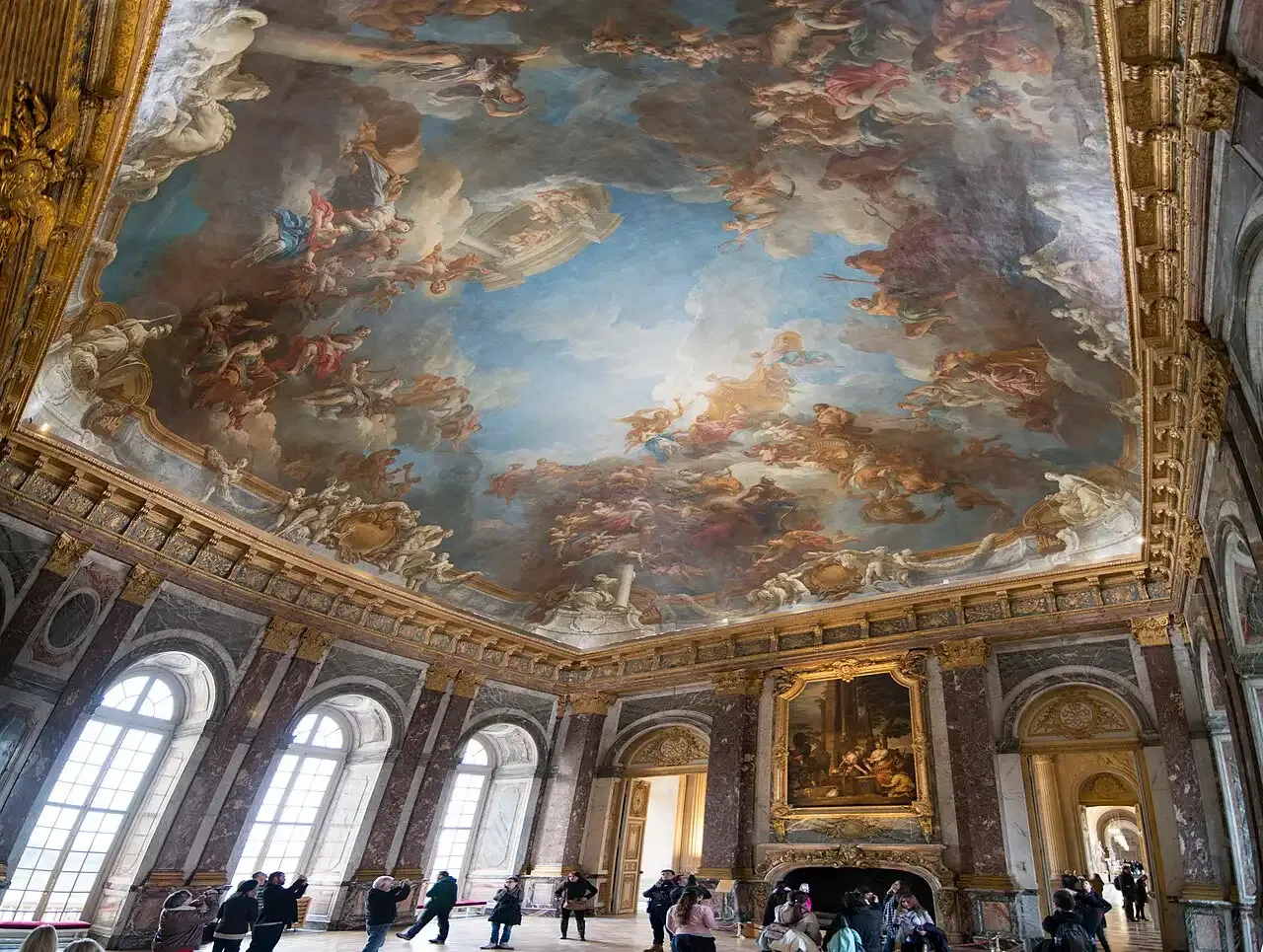
Did Michelangelo paint at the Palace of Versailles?
Michelangelo never painted at the Palace of Versailles. The Italian Renaissance artist died in 1564, 97 years before Louis XIV began transforming his father's hunting lodge into a royal palace in 1661. French Baroque painters created the ceiling paintings that circulate on social media as Michelangelo's work: Charles Le Brun, François Lemoyne, and Charles de La Fosse.
Support when you need it
Customer support to help you with everything you need from 8:00 to 18:00.
Fast and online booking
Select your ticket for your needs and preferences and avoid the lines booking here.
Top attraction in Versailles
Explore the Versailles Palace to see the royal architecture and the historical evolution of the French monarchy.
Why do people think Michelangelo painted at Versailles?
A Facebook art page labeled a photograph of a Versailles ceiling as "Michelangelo's painting at the Palace of Versailles." One version referenced the Hall of Apollo; another featured the ceiling of the Salon of Hercules (Salon d'Hercule). Thousands of users shared both posts, and similar claims spread across X, Pinterest, and Instagram. Amazon, Etsy, and Pinterest now sell posters and art prints with the same false attribution.
The mistake makes visual sense. The Versailles ceilings and Italian Renaissance ceiling art share surface-level traits: mythological figures at massive scale and color filling entire vaulted surfaces. Someone who doesn't know the difference between Renaissance and Baroque painting sees these ceilings and thinks of the Sistine Chapel. The Versailles painters worked more than a century after Michelangelo died in 1564.
Main photo: “Panorama of the ceiling of Le salon d'Hercule” by Jorge Láscar
Who actually painted the ceilings at Versailles?
Three French painters created the major ceiling works at the Palace of Versailles. Charles Le Brun directed the palace's decorative program and painted the Hall of Mirrors ceiling with 30 scenes glorifying Louis XIV's reign. François Lemoyne (1688-1737) painted the Apotheosis of Hercules in the Salon of Hercules. Charles de La Fosse completed the Hall of Apollo ceiling.
Versailles had no single painter. Le Brun's Hall of Mirrors program is the best-known ceiling work in the palace, while the most shared image online is Lemoyne's Salon of Hercules ceiling, misattributed to Michelangelo in post after post. Each painter's work occupies a distinct gallery. The palace map and entrances page covers the layout of the State Apartments where these ceiling paintings are concentrated.
François Lemoyne and the Apotheosis of Hércules
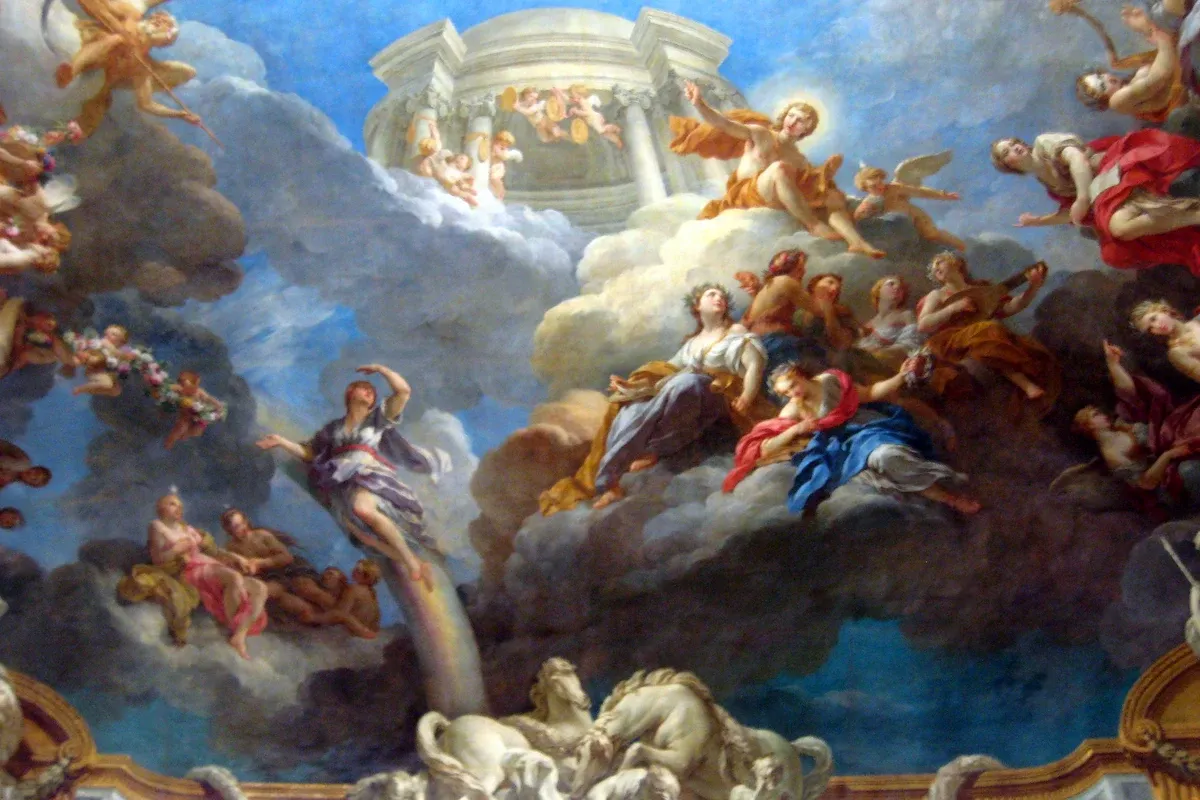
François Lemoyne and the Apotheosis of Hércules
François Lemoyne painted the ceiling misattributed to Michelangelo online. The Apotheosis of Hercules, completed between 1733 and 1736, covers the ceiling of the Salon of Hercules with 142 mythological figures. The painting depicts Hercules ascending to Mount Olympus after completing his mortal labors, received among the gods in a swirl of clouds and drapery.
Lemoyne spent three years on the composition, on scaffolding beneath one of the largest painted ceilings in Europe. Louis XV commissioned the painting; Louis XIV had died in 1715. Louis XV named Lemoyne Premier Peintre du Roi (First Painter to the King) in 1736 for the work. Lemoyne died the following year at age 49.
Which other painters decorated the Versailles ceilings?
Charles de La Fosse painted the Hall of Apollo (Salon d'Apollon), the room referenced in one viral Facebook post. Three artists painted the Royal Chapel frescoes in parallel after its consecration in 1710.
| Room | Hall of Apollo |
|---|---|
| Painter | Charles de La Fosse |
| Date | c. 1681 |
| Subject | Apollo in his sun chariot, surrounded by the four seasons |
| Room | Royal Chapel (nave vault) |
|---|---|
| Painter | Antoine Coypel |
| Date | c. 1709 |
| Subject | God the Father in His Glory |
| Room | Royal Chapel (apse) |
|---|---|
| Painter | Charles de La Fosse |
| Date | c. 1709 |
| Subject | The Resurrection of Christ |
| Room | Royal Chapel (tribune) |
|---|---|
| Painter | Jean Jouvenet |
| Date | c. 1709 |
| Subject | The Descent of the Holy Spirit |